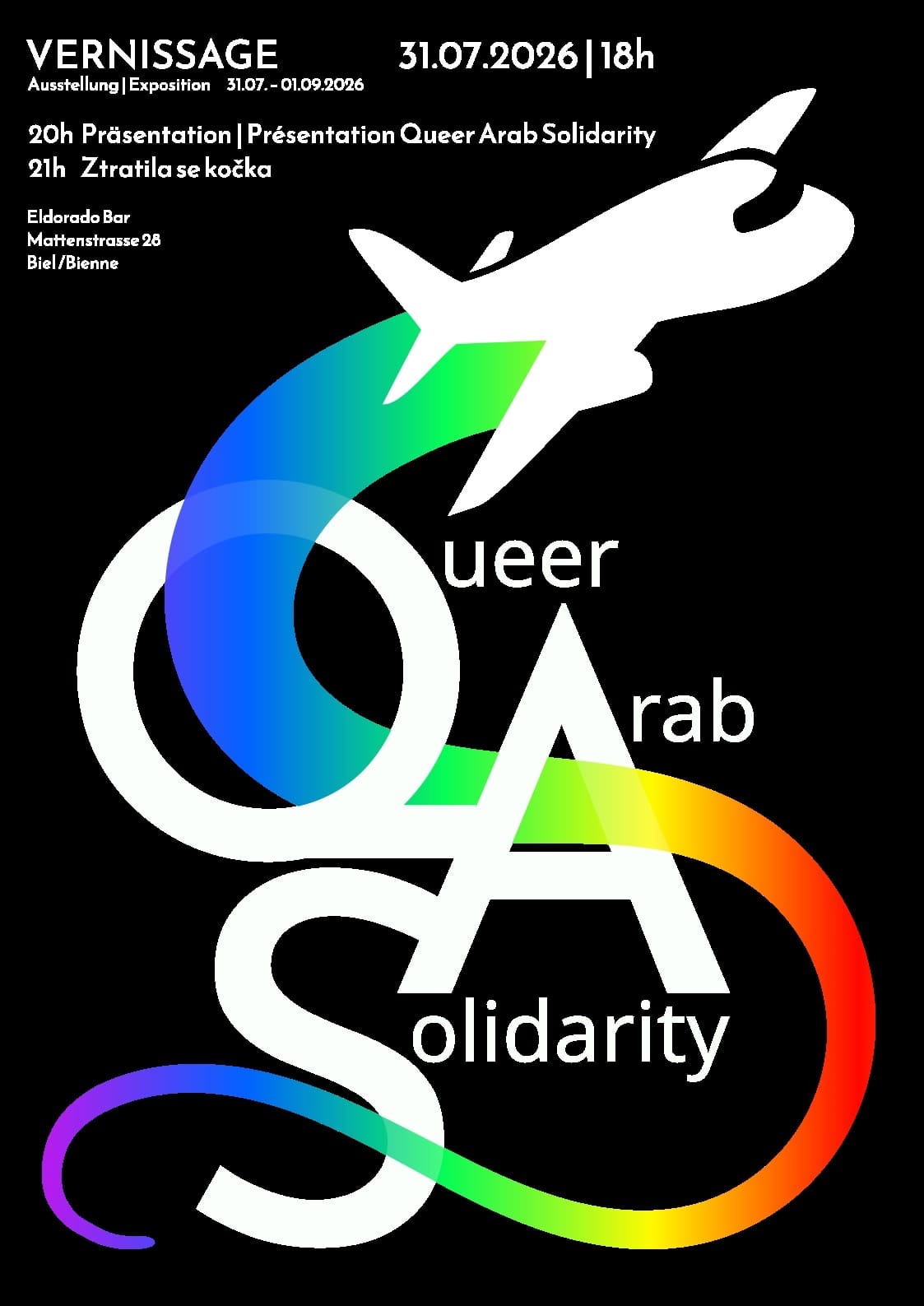
The art exposition at the Eldorado Bar in Biel is now open and can be visited until the 01.09.26.
All proceeds will go to benefit the Queer Arab Solidarity.
Members of the LGBTQIA+ community in many Arab and Islamic countries face direct and ongoing legal risks because of laws that criminalize same-sex relationships or target them through vague terms such as “public indecency,” “offending morals,” or “debauchery.”
In some countries, the laws are explicit, such as Article 489 of Morocco’s Penal Code, Article 230 of Tunisia’s Penal Code, Article 338 of Algeria’s Penal Code, and Article 534 of Lebanon’s Penal Code. These laws punish people with prison sentences or fines simply because of their identity or consensual relationships.
In other countries, same-sex relations are not directly mentioned, but unclear legal articles about “public morality” or “decency” are used to target LGBTQIA+ people — for example, in Egypt, Iraq, Bahrain, Yemen and Saudi Arabia. These laws give the authorities wide power to interpret and apply them, leading to arbitrary arrests, blackmail, and privacy violations.
In countries that apply Islamic sharia as a main source of criminal law, such as Mauritania, Sudan, and parts of Somalia, same-sex relationships are treated as serious religious crimes, with punishments that can include long imprisonment or even the death penalty in some cases. This creates a dangerous reality where people risk their freedom or lives simply for who they are.
The continuation of these laws not only violates basic human rights but also creates an atmosphere of fear, silence, and institutional violence. Understanding these legal dangers is essential for recognizing the real situation of the LGBTQIA+ community in the region and for defending the rights to dignity, safety, and equality for all individuals.

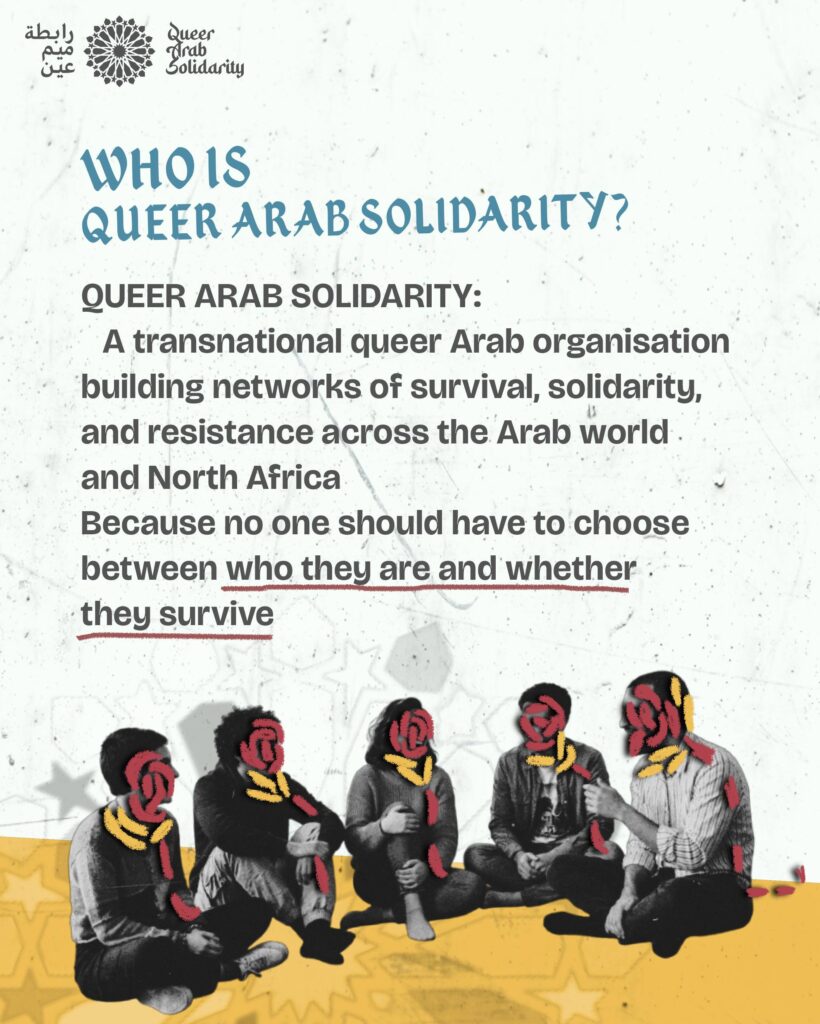
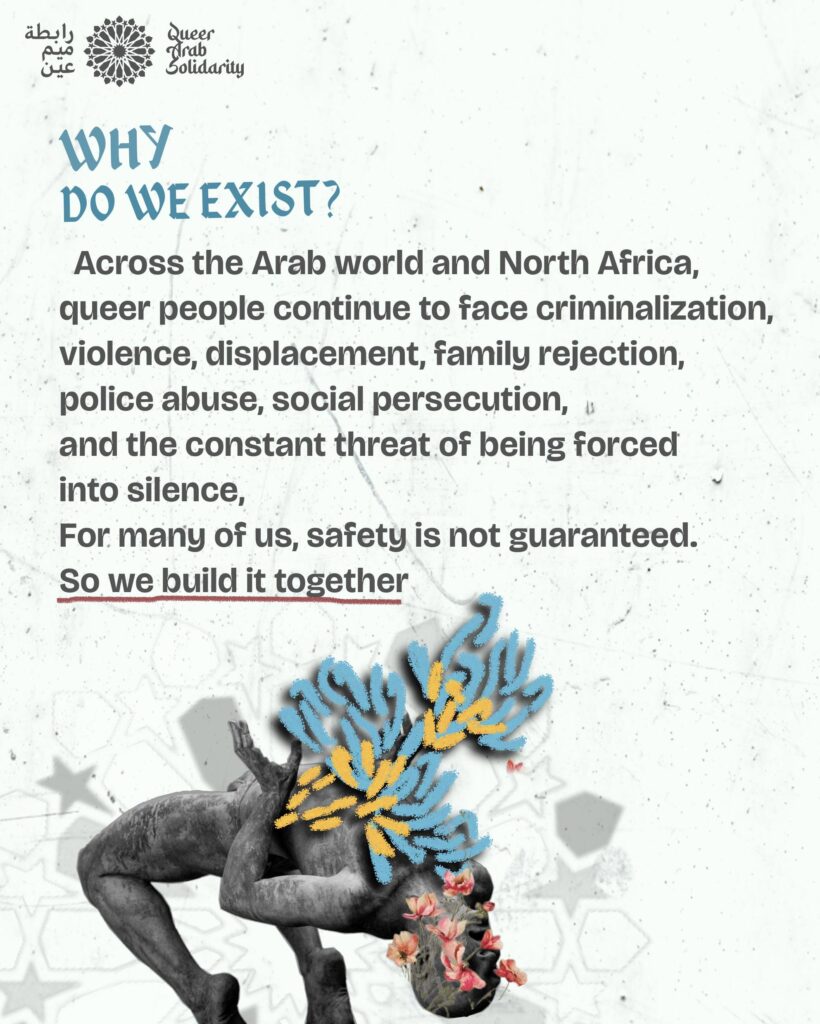
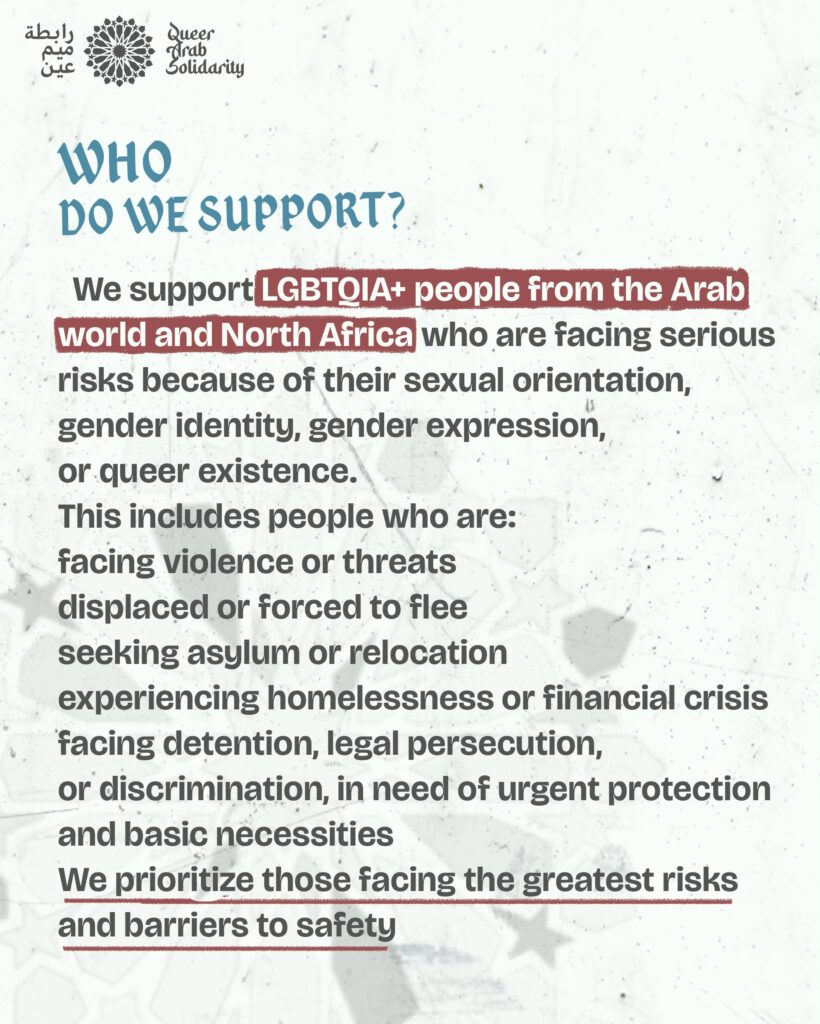
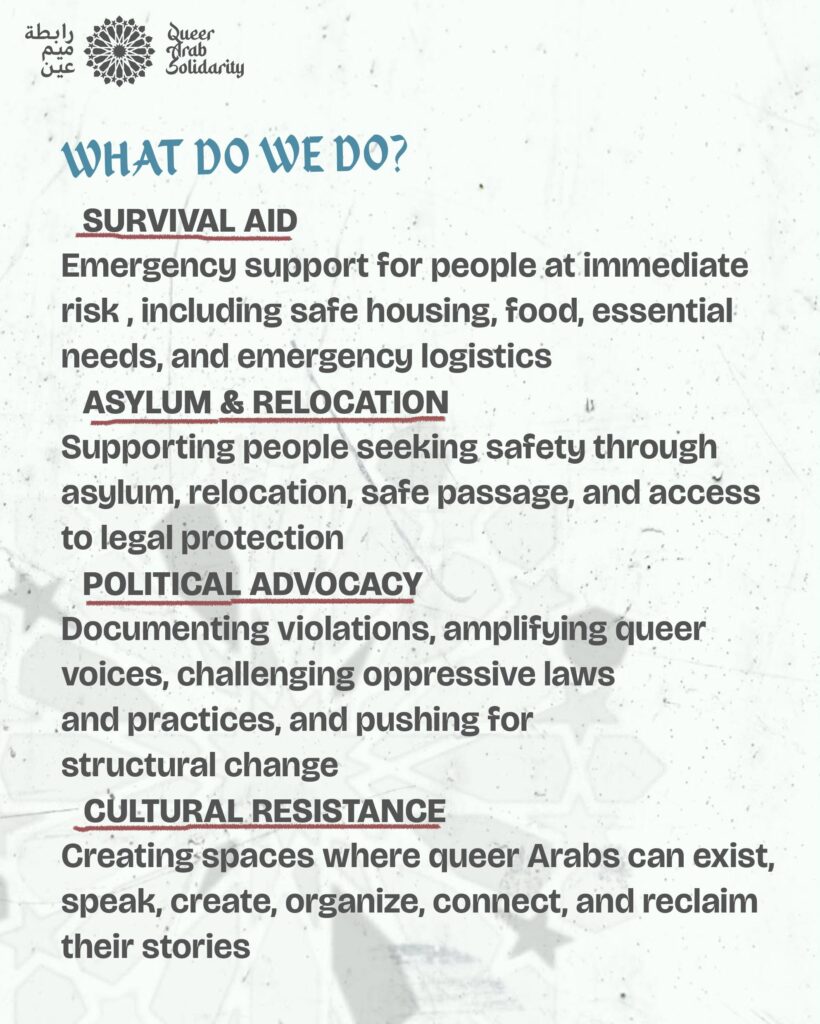
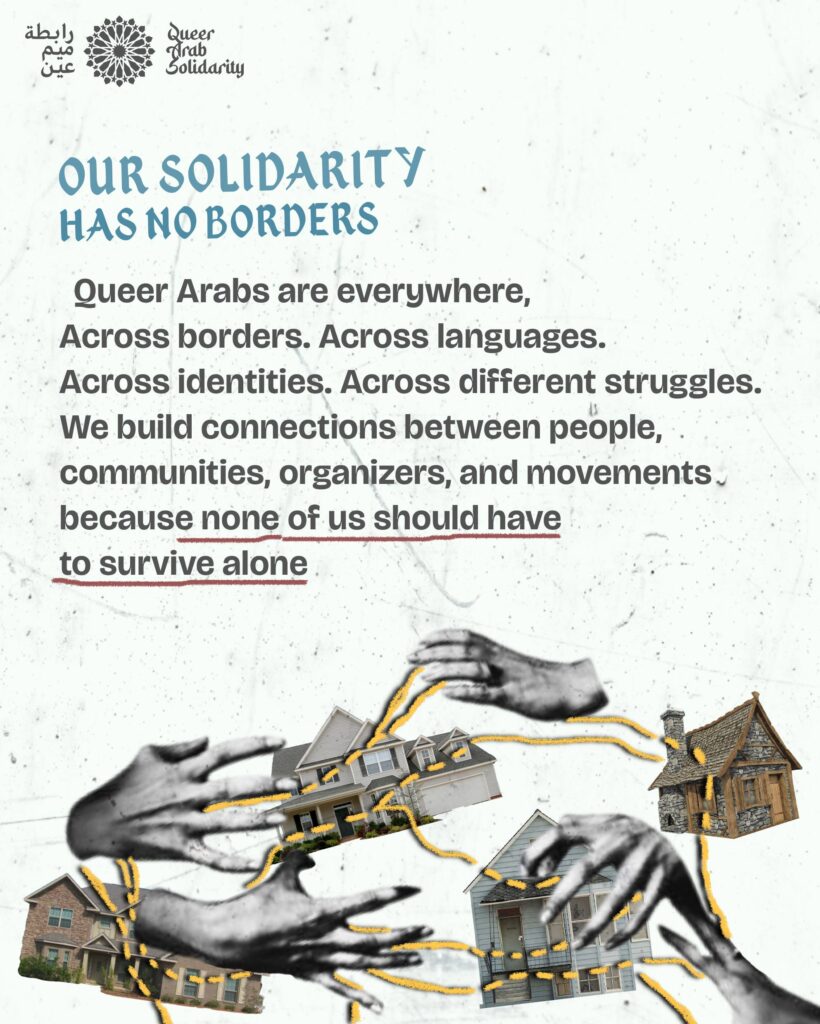
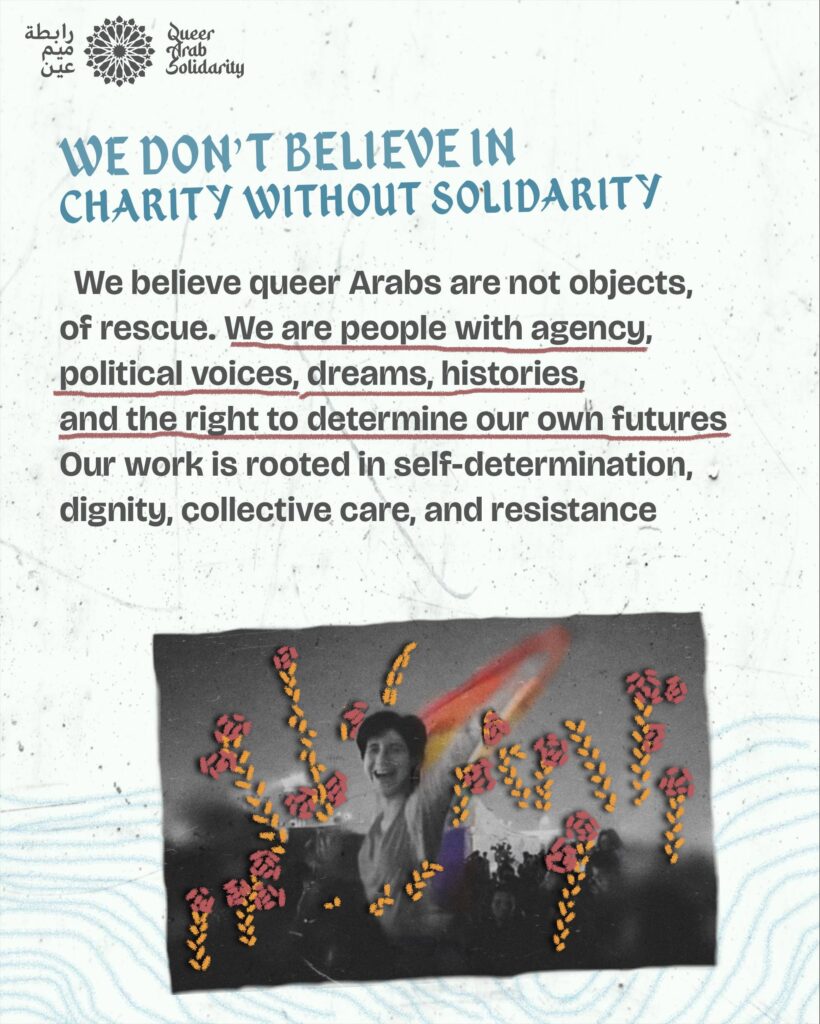
We are a self-organized, transnational queer Arab collective. Since 2020, we have resisted erasure, violence, and criminalization across the Arab world and North Africa. We build networks of survival, solidarity, and resistance for those whose lives are threatened for their sexual orientation or gender identity.
Our work is urgent and multifaceted: we provide safe housing, food, and basic support for those targeted; we assist with asylum and relocation to safer countries; and we confront oppressive laws and social norms through advocacy, documentation, and cultural resistance. We exist to defend freedom, dignity, and safety.